

Photo: Unsplash
Where it comes from, in one strip
What it borrowed is older: breath tied to movement, slow control, and the Greek idea that training the body is part of educating the whole person. The full story, legends separated from records, is in our feature on the older practices behind Pilates.
What the trials actually show
How well each claim is supported, in our reading of the reviews below. Open a row for the detail.
Low back pain: the best-studied claim
The Cochrane review of Pilates for non-specific low back pain included 10 trials and 510 people. Its conclusion: Pilates "is probably more effective than minimal intervention in the short and intermediate term" for pain and disability, and "probably not more effective than other exercises". The evidence was low to moderate quality and few or no adverse events were reported [1]. Better than doing nothing, not magic, and safe.
Flexibility, balance and endurance
A systematic review of 16 controlled studies in healthy adults found strong evidence that Pilates improves flexibility and dynamic balance and moderate evidence for muscular endurance, while noting the studies' low scientific rigour [2]. In older adults, a meta-analysis of nine randomised trials of mat Pilates found large effects on dynamic balance, strength, flexibility and cardiorespiratory fitness [3].
Performance, not recovery
We found no trial of Pilates and muscle soreness or recovery between training sessions. The closest evidence is a 12-week randomised trial in 32 recreational runners: the group that added two one-hour mat Pilates sessions a week ran 5 km about two and a half minutes faster and used less energy at a set pace than the running-only group [4]. A 2023 review of 12 small studies in athletes reported gains in balance, agility, core strength and flexibility over 4 to 14 weeks, without a risk-of-bias appraisal [5]. Useful, and not the same as "recovers you faster".
Mood and sleep
A meta-analysis of eight controlled trials found large reductions in depressive symptoms and anxiety and large improvements in energy and fatigue with Pilates, with the authors cautioning that trials were few, small and mostly against inactive controls [7]. Six randomised trials with 477 people found Pilates improved sleep quality questionnaire scores by about 3.6 points against non-exercising controls, with very high heterogeneity between studies, and no significant effect in the healthy over-40 subgroup [17].
So: Pilates on a recovery day is a good bet for range, balance, trunk control and a steadier mood. It is not an ice bath substitute and it is not a treatment.
Mat or reformer?
Nobody has run the head-to-head trial. The older-adult meta-analysis is mat-only [3]. One small electromyography study measured the hundred on a mat and on a reformer in 11 trained women and found no difference in abdominal activation [6]. Everything else is mechanics and money.
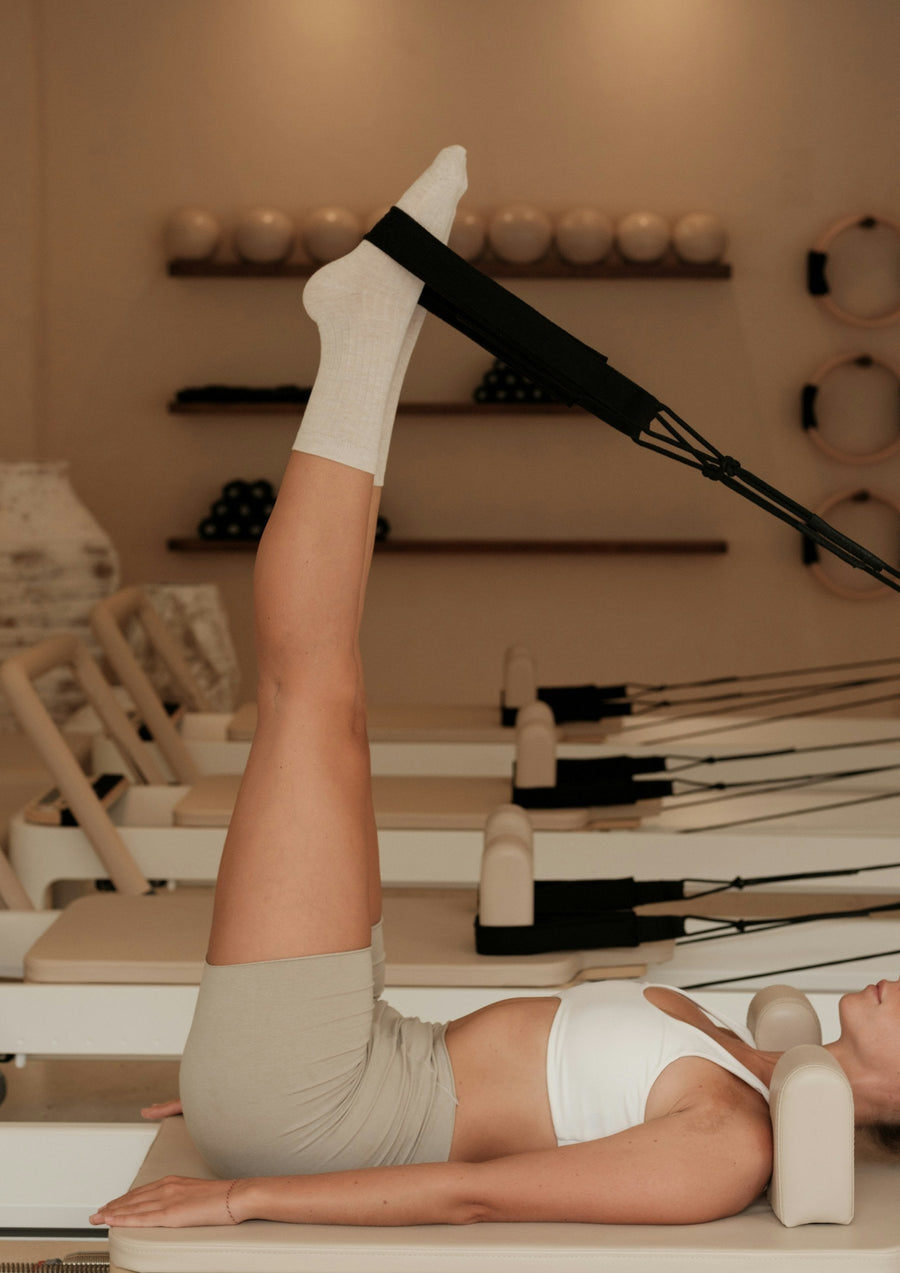
Our rule of thumb for recovery days: start on the mat for three months, twice a week. If you still want more, and you have the floor space and the budget, then look at a reformer, and buy one with a tower or a stand for upright storage so it does not become a clothes rack. The founder of this site owns a Merrithew reformer and likes it; our reformer ratings, against the same published standard, are coming before the January peak.
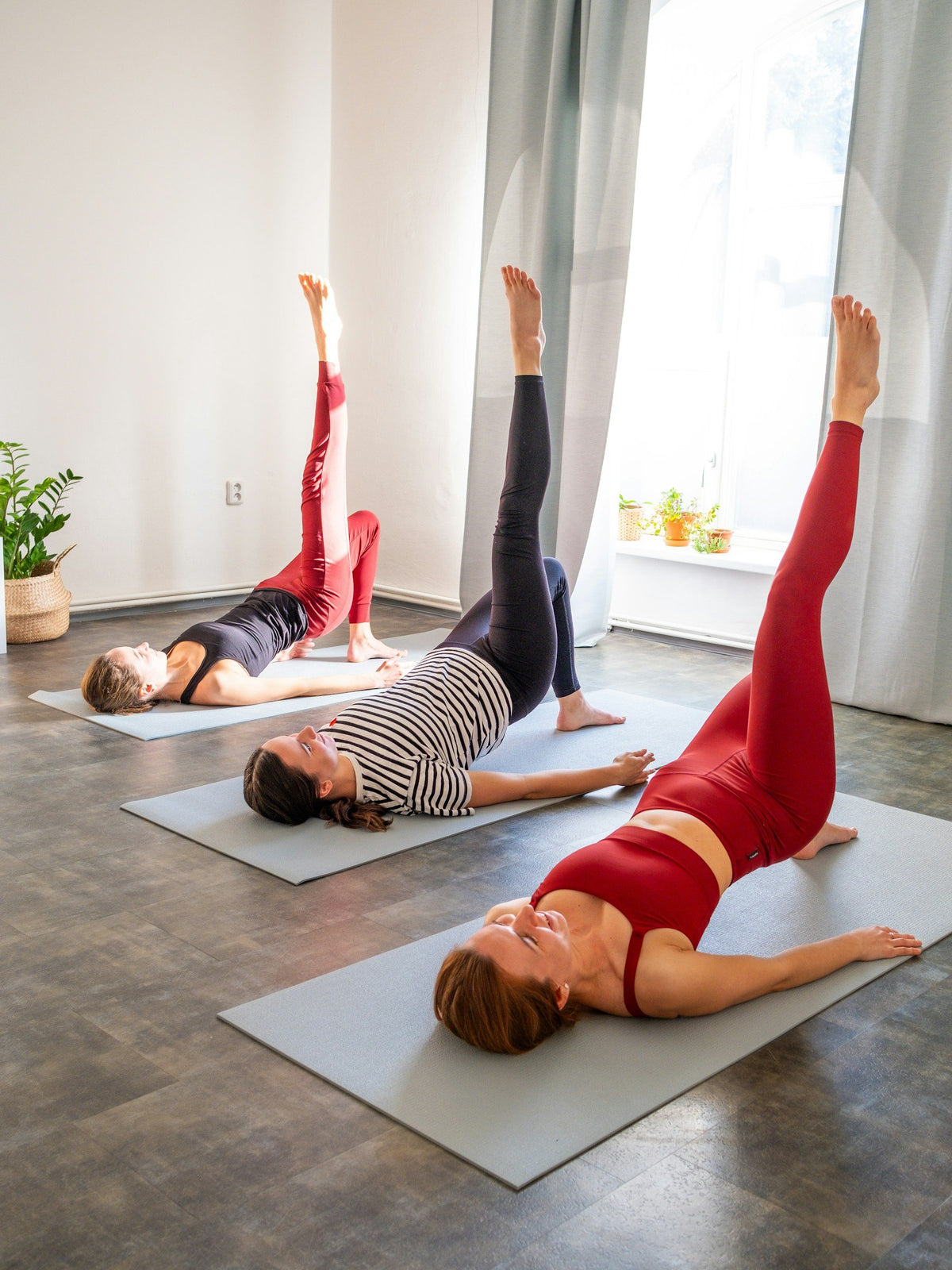
Single-leg bridges in a class. On a recovery day, keep both feet down. Photo: Unsplash
A 15-minute mat routine for recovery days
Exercise names and times only. Move slowly, breathe wide into the back and sides of the ribs, and stop short of strain. You need a mat; a small ball or folded towel under the head is optional. Press start and the timer walks you through it.
"No forward bending" skips spine stretch forward and the standing roll-down, for anyone a clinician has told to avoid flexion (see Who should check first).
Pilates with heat and cold
How often
Joseph Pilates' instruction, as reproduced from Return to Life Through Contrology (1945), was to practise "regularly only four times a week for just three months" and to perform the exercises "ten minutes without fail", expecting sessions to lengthen on their own [11]. For recovery days, the routine above twice a week is the floor; four short sessions beats two long ones.
Who should check first
In pregnancy, Pilates is generally considered safe without complications, with the usual cautions above and no heat [14]; one NHS physiotherapy service does not take new Pilates attendees in the first three months [12]. With osteoporosis or a high fracture risk, the International Osteoporosis Foundation advises avoiding trunk flexion exercise, which in Pilates terms means roll-ups, roll-downs and spine stretch forward, while extension and abdominal stabilisation are considered safe [15]; check with your GP before any class, and stop if anything hurts [16].
The gear that matters
Mat thickness is the whole question
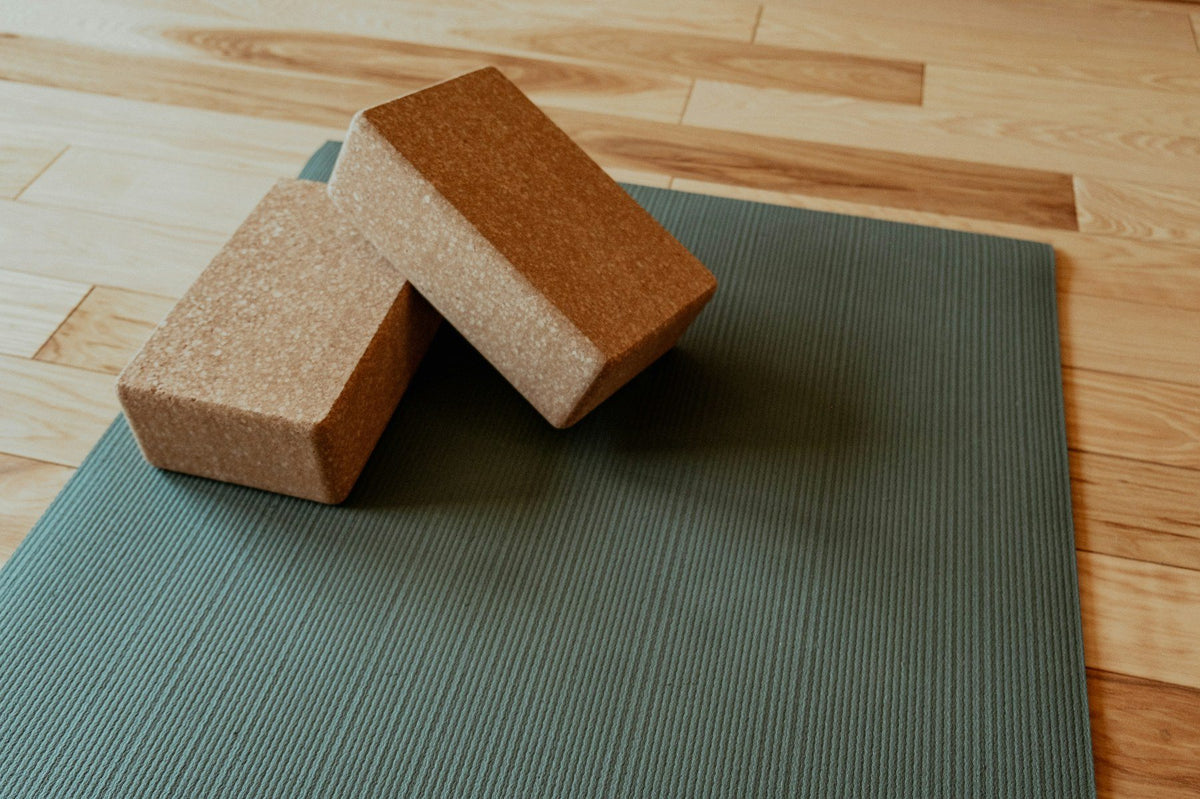
Yoga mats are built for standing grip. Pilates mats from the method's own equipment makers are built for lying, rolling and side-lying work: Merrithew's Pilates Express Mat is 10 mm ($41.99) and its Deluxe Pilates Mat is 15 mm ($85, closed-cell foam, 72 by 24 inches, 3.5 pounds), both with a defect-replacement warranty and 30-day returns [8]; Balanced Body's Aeromat is about 16 mm and its EcoWise mat about 10 mm, prices on request [9]. We have not rated a Pilates mat yet, so these are facts, not recommendations.
For the routine above, a dense yoga mat works. The Manduka PRO 6 mm (Meets the TMR Standard) is closed-cell PVC dense enough that rolling exercises do not find the floor. The JadeYoga Harmony, our movement Editor's Pick, is 4.7 mm natural rubber: superb grip, thinner under the spine, so put a folded towel under the sacrum for rolling. Doing mostly mat Pilates? A 10 mm Pilates mat is the better tool. Our yoga mat finder covers the mats we have rated.
Thinking about a reformer at home? Our PersonalHour Janet Elite Plus rating covers a foldable maple reformer with six springs, held because reformers are non-returnable and moving parts get 6 months of full cover.
Questions people ask
Does Pilates help recovery after a workout?
Indirectly. No trial has tested Pilates on soreness or recovery time. It is well supported for flexibility, balance, trunk endurance and mood, which are what keep you training [2, 3, 7].
Is Pilates good for back pain?
The Cochrane review says it is probably better than minimal intervention for pain and disability, and not clearly better than other exercise [1]. See a clinician about pain first.
Mat or reformer for recovery days?
Mat first. There is no head-to-head trial; a reformer's springs let you move with the load dialled down, which is pleasant on tired days, but it costs thousands and needs floor space [6].
How thick should a Pilates mat be?
The method's own makers sell 10 to 16 mm mats for mat work, versus 4 to 6 mm for yoga [8, 9]. A dense 6 mm yoga mat works for a short routine; a 10 mm Pilates mat is better if you only do mat work.
How often should I do Pilates?
Joseph Pilates said four times a week, ten minutes without fail [11]. Clinical programmes use twice a week for 30 to 60 minutes [12].
Can I do Pilates after a cold plunge?
Yes. Keep the plunge away from strength sessions if muscle is the goal [18].
Can I do Pilates when pregnant?
Generally yes without complications, with modifications after 16 weeks and a prenatal-qualified teacher [14]. Ask your midwife or doctor.
Is Pilates ancient?
No, about a hundred years old. Its roots are older. Our feature separates the records from the legends.
Read November 2, 2026. Prices and warranties as read on the makers' pages that day. Photos: Unsplash.
- Yamato TP, et al. Pilates for low back pain. Cochrane Database of Systematic Reviews, 2 July 2015. cochrane.org
- Cruz-Ferreira A, et al. A systematic review of the effects of Pilates method of exercise in healthy people. Arch Phys Med Rehabil, 2011. record
- Bueno de Souza RO, et al. Effects of mat Pilates on physical functional performance of older adults. Am J Phys Med Rehabil. 2018;97(6):414-425. record
- Finatto P, et al. Pilates training improves 5-km run performance. PLoS ONE. 2018;13(3):e0194057. pmc.ncbi.nlm.nih.gov
- Yilmaz O, et al. How Pilates exercises affect sports performance? Turk J Physiother Rehabil. 2023;34(3):367-373. record
- Electromyographic analysis of the rectus femoris and rectus abdominis during the hundred and teaser. Rev Bras Med Esporte. scielo.br
- Fleming KM, Herring MP. The effects of Pilates on mental health outcomes. Complement Ther Med. 2018;37:80-95. record
- Merrithew: Deluxe Pilates Mat, Pilates Express Mat
- Balanced Body: Aeromat, EcoWise, Ultra-Fit Circle, warranty, returns
- Merrithew accessories: Fitness Circle Pro, Mini Stability Ball, Foam Roller Deluxe
- Pilates JH. Return to Life Through Contrology (1945), as reproduced in an excerpt (secondary). excerpt, archive.org
- Wirral University Teaching Hospital NHS Foundation Trust. Physiotherapy Pilates leaflet. wuth.nhs.uk
- Cleveland Clinic. Everything you want to know about Pilates. 10 March 2023. clevelandclinic.org
- Tommy's. Pilates and pregnancy. tommys.org
- International Osteoporosis Foundation. Exercise for individuals with osteoporosis. osteoporosis.foundation
- NHS Fitness Studio. Osteoporosis Pilates exercise video. nhs.uk
- Chen Z, et al. Effect of Pilates on sleep quality. Front Neurol. 2020;11:158. frontiersin.org
- Piñero A, et al. Throwing cold water on muscle growth. Eur J Sport Sci. 2024;24(2):177-189. record