
Short answer: Usually not on their own. The IRS does not treat equipment bought for general health or wellness as a medical expense. It may be possible if a medical provider documents that the item treats a specific diagnosed condition, usually with a letter of medical necessity, but plan rules vary and a letter is not a guarantee. This is general information, not tax or medical advice: check with your plan administrator or a tax professional before you spend HSA or FSA money.

What the IRS rule actually says
HSAs and health FSAs can only pay for qualified medical expenses, as defined in IRS Publication 502: the costs of diagnosis, cure, mitigation, treatment, or prevention of disease. The spending must be mainly to alleviate or prevent a physical or mental illness or disability.
Can count
- Treating or preventing a specific diagnosed condition
- Special equipment installed at home whose main purpose is medical care (only the cost above any rise in your home's value)
- Running and upkeep costs, when the main reason is medical care
Does not count
- Anything merely beneficial to general health
- Health club dues and general fitness
- Exercise "recommended by a doctor" without a specific diagnosed condition it treats
Publication 502 does not mention saunas, cold plunges or red light therapy by name, so the general test decides: is the purchase mainly to treat a specific medical condition, or is it for general health?
Saunas
For most buyers a home sauna is a general wellness purchase, so it does not meet the IRS test. Some sauna sellers now offer HSA and FSA checkout through a third-party service that issues a letter of medical necessity after a health questionnaire. That does not change the IRS rule. It only creates documentation that may support a claim if your situation fits it.
A sauna built into your home may also be treated as a capital expense. If so, any increase in your home's value would reduce the amount that could count. We could not find IRS guidance applying this to saunas specifically, so treat it as a question for a tax professional.
Still choosing a type? See infrared vs traditional sauna and 120V or 240V.
Cold plunges
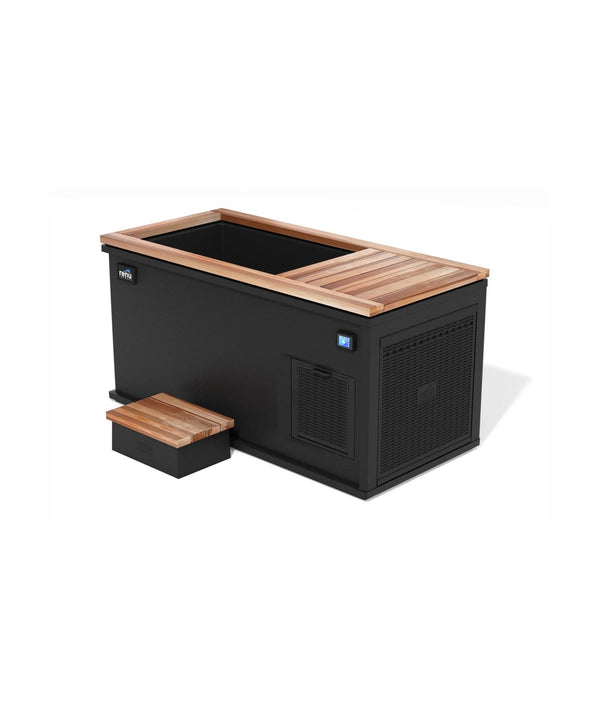
The same logic applies. A cold plunge bought for recovery or general wellness is a personal expense under the IRS definition. Some sellers offer letter-based checkout here too. Whether that holds up depends on a real diagnosed condition, a provider's judgment, and your plan's rules.
For what to look for in the plunge itself, see how to choose a cold plunge.
Red light therapy
Red light therapy devices in the US fall into two groups:
FDA-cleared
Cleared for a specific use, such as certain low-level light hair growth devices. The clearance covers that stated use only.General wellness
Many panels are sold under the FDA's general wellness policy (current guidance dated January 2026): low-risk products for a healthy lifestyle, with no disease or treatment claims.Does FDA clearance make a device HSA or FSA eligible? Not automatically. We found no IRS source that ties eligibility to FDA status. A device cleared for a specific condition may be easier to connect to medical care, but the IRS test still turns on why you are buying it. Ask your administrator.
For what to look for in a device, see how to choose red light therapy.
Letters of medical necessity: how they work, and the catch
A letter of medical necessity (LMN) is a note from a licensed medical provider stating that an item or service is needed to treat or prevent a specific condition you have. Several companies, such as Truemed, now offer them online for wellness purchases, and some sellers build this into checkout:
- Some companies were misrepresenting when wellness expenses can be paid from HSAs and FSAs.
- A doctor's note based on self-reported health information does not turn a personal expense into a medical one.
- Plans that pay for non-medical expenses are not qualified plans, which can make even legitimate reimbursements taxable.
The warning did not name saunas, cold plunges or red light therapy, so we cannot say how any specific letter would be treated.
A letter from your own doctor, for a condition you have been diagnosed with and are being treated for, is a different situation from a letter generated at checkout. Neither is a guarantee.
Sellers that offer an HSA/FSA checkout
These makers of gear we rate offer Truemed at checkout, according to their own sites (checked October 23, 2026). Truemed's provider decides whether you qualify, not the seller, and the IRS caution above still applies. We leave out any savings figures the sellers quote, because they depend on your own tax situation.
- Saunas: Sun Home (in its FAQ), Redwood Outdoors
- Cold plunges: Plunge, Ice Barrel, The Cold Life, Redwood Outdoors
- Red light and heat wellness: HigherDOSE
We found no HSA/FSA checkout on the sites of Clearlight, Renu Therapy or Plunge Chill. These are plain links; we do not earn from them.
What happens if a purchase is not eligible
HSA
The money is taxed as income, plus an extra 20% tax. The 20% does not apply after 65, disability or death, but income tax still does.FSA
FSAs can only reimburse qualified expenses, backed by proof such as a receipt. A claim may be denied, or your plan may require repayment. Details vary by plan.Check before you buy
Tick them off as you go.
Common questions
Is a sauna a qualified medical expense?
Not by default. It may count only if it is mainly for treating a specific medical condition and your plan accepts the documentation.
Does a letter of medical necessity guarantee my purchase is eligible?
No. The plan administrator decides, and the IRS has warned that notes based on self-reported information do not make personal expenses medical.
Is an FDA-cleared red light device automatically HSA eligible?
No. FDA clearance covers a specific intended use. It may help show a medical purpose, but eligibility still depends on the IRS test and your plan.
Can I use my FSA for a cold plunge?
Only if your plan accepts it as a qualified medical expense, which generally means it treats a diagnosed condition and is documented.
Does The Modern Recovery earn money from HSA or FSA checkout services?
No. If we link to a product, we may earn an affiliate commission, as noted on each rating.
Sources, read October 2026: IRS Publication 502; IRS Publication 969; IRS FAQ on nutrition, wellness and general health expenses; IRS news release IR-2024-65 (March 2024); FDA general wellness policy (January 2026). Not tax, legal or medical advice.